
Improbable: proud to support Team Forces in funding sport, challenge and adventure
Improbable: proud to support Team Forces in funding sport, challenge and adventure for the armed forces community “The adventure training and challenges funded by Team Forces introduce new levels of personal resilience. They mean that when you next put somebody in a stressful operational position – be it on a ship, on land or in […]
Accelerating synthetic environment creation to support national resilience and security

Rob specialises in the application of modelling and simulation to the development of solutions to emergent 21st century issues. As a Fellow of the Operational Research Society and a Dstl Senior Fellow, Rob’s analysis underpinned four UK and US defence reviews and the acquisition and design of numerous systems including the F-35 and Queen Elizabeth-class […]
NATO has guaranteed our collective security for over 70 years

NATO has guaranteed our collective security for over 70 years. Now we need to ensure that it is properly fit for another seventy Sir Chris Harper KBE FRAeS Improbable advisor Air Marshal Sir Christopher Harper is a former-Director General of the NATO International Military Staff. The North Atlantic Treaty Organisation NATO turned 73 on 4th […]
Amortised Likelihood-free Inference for Expensive Time-series Simulators with Signatured Ratio Estimation

Amortised Likelihood-free Inference for Expensive Time-series Simulators with Signatured Ratio Estimation Proceedings of the 25th International Conference on Artificial Intelligence and Statistics (AISTATS) 2022 Simulation models of complex dynamics in the natural and social sciences commonly lack a tractable likelihood function, rendering traditional likelihood-based statistical inference impossible. Recent advances in machine learning have introduced novel […]
Black-box Bayesian inference for economic agent-based models

Black-box Bayesian inference for economic agent-based models Preprint Simulation models, in particular agent-based models, are gaining popularity in economics. The considerable flexibility they offer, as well as their capacity to reproduce a variety of empirically observed behaviours of complex systems, give them broad appeal, and the increasing availability of cheap computing power has made their […]
Improbable Defence @ IT2EC 2022
Improbable Defence @ IT2EC 2022 In the face of a fluid, fast-moving threat landscape, the latest multi-domain synthetic environments are a critical capability for defence and security. They can offer a crucial competitive edge to organisations and personnel that need to operate effectively in fast-moving, fluid and often highly ambiguous situations. That’s why events like […]
A dynamic microsimulation model for epidemics
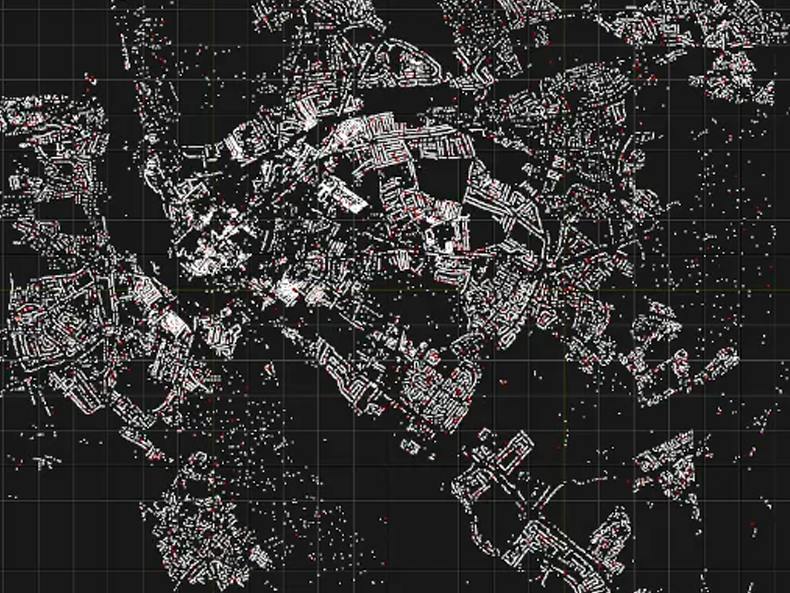
A dynamic microsimulation model for epidemics Social Science & Medicine, Vol. 291 A large evidence base demonstrates that the outcomes of COVID-19 and national and local interventions are not distributed equally across different communities. The need to inform policies and mitigation measures aimed at reducing the spread of COVID-19 highlights the need to understand the […]
Generating agent-based models from scratch with generic programming

Generating agent-based models from scratch with generic programming ALIFE 2021: The Conference on Artificial Life Program synthesis (PS) and genetic programming (GP) allow non-trivial programs to be generated from example data. Agent-based models (ABMs) are a promising field of application as their complexity at a macro level arises from simple agent-level rules. Previous attempts at […]
Deep signature statistics for likelihood-free time-series models

Deep signature statistics for likelihood-free time-series models ICML 2021 (INNF Workshop) Simulation-based inference (SBI) has emerged as a family of methods for performing inference on complex simulation models with intractable likelihood functions. A common bottleneck in SBI is the construction of low-dimensional summary statistics of the data. In this respect, time-series data, often being high-dimensional, […]
Trusting a black box: explaining complex simulation outcomes using LIME

Trusting a black box: explaining complex simulation outcomes using LIME The field of Artificial Intelligence (AI) has recently been suffering an “interpretability crisis”: black-box techniques like deep learning produce impressively accurate predictions, but fail to offer any human intelligible explanation, making it hard to establish their safety and fitness-of-purpose in highly regulated or safety-critical domains. […]