
Trusting a black box: explaining complex simulation outcomes using LIME

Trusting a black box: explaining complex simulation outcomes using LIME The field of Artificial Intelligence (AI) has recently been suffering an “interpretability crisis”: black-box techniques like deep learning produce impressively accurate predictions, but fail to offer any human intelligible explanation, making it hard to establish their safety and fitness-of-purpose in highly regulated or safety-critical domains. […]
Machine learning surrogates for highly realistic simulations

Machine learning surrogates for highly realistic simulations High-fidelity simulations of real world systems such as traffic, physical infrastructure and the civilian population are the next frontier in improving the depth and sophistication of military simulations. Such complex systems are difficult to model with complete accuracy, and often involve unobserved free parameters. To make these simulations […]
Generalized posteriors in approximate Bayesian computation
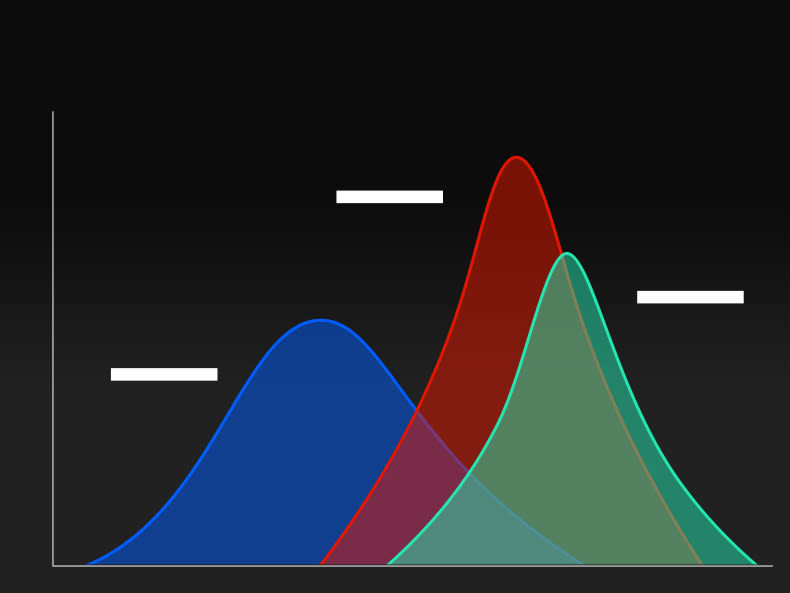
Generalized posteriors in approximate Bayesian computation Complex simulators have become a ubiquitous tool in many scientific disciplines, providing high-fidelity, implicit probabilistic models of natural and social phenomena. Unfortunately, they typically lack the tractability required for conventional statistical analysis. Approximate Bayesian computation (ABC) has emerged as a key method in simulation-based inference, wherein the true model […]